All journeys · Southeast Asia
A mango’s place in everyday life.
A Thai variety name, a Perlis rice dish, a Vietnamese growing region and a Philippine scientist. Four ways a mango becomes part of a place.
Thailand, Malaysia, Vietnam and the Philippines
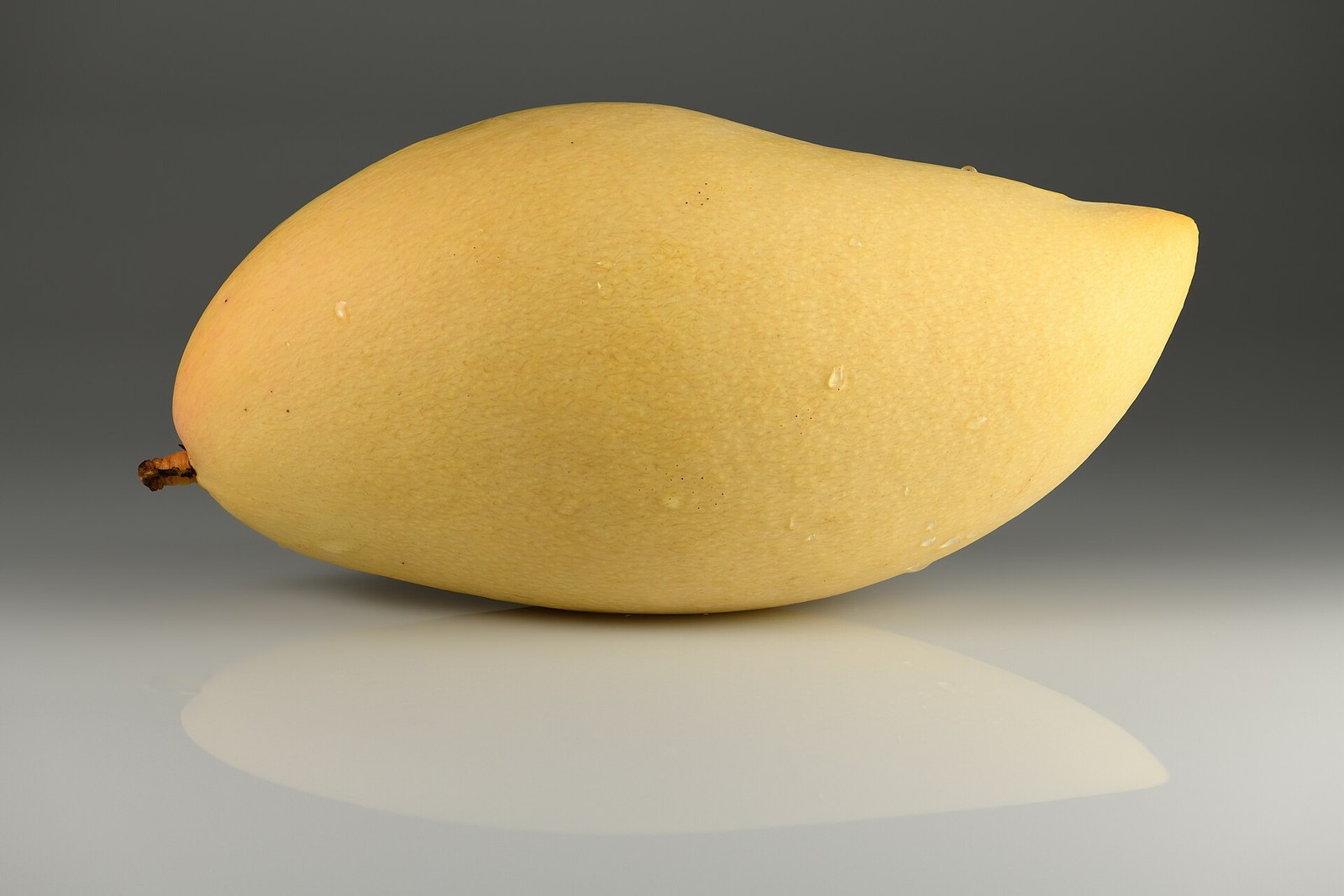
A Nam Dok Mai mango grown in Thailand, photographed by Ivar Leidus. This is a focus stack of 12 photographs. Named selections within this familiar Thai name deserve their own records.
Mango fruit Nam Dok Mai.jpg — Ivar Leidus. Photograph source · CC BY-SA 4.0.

Resized for display; complete frame retained. No generative edits.
A mango can carry more than its botanical identity. A name can hold several selections; a dish can make one variety inseparable from a region; a scientist can change when an existing fruit is harvested. Follow four different connections between mangoes and the people who grow and eat them.
Stop 1 · Thailand · record
A familiar name branches into selections.
Nam Dok Mai
น้ำดอกไม้ · Nam Dok Mai Si Thong · Nam Dok Mai Number 4
Thailand’s agricultural extension exhibition lists Nam Dok Mai Number 4 and Nam Dok Mai Si Thong separately. The shared words are a useful entrance, but the rest of the name matters. A visitor who remembers a particular golden selection should be able to keep following that distinction.
Stop 2 · Perlis, Malaysia · record
A variety finds a home beside glutinous rice.
Harumanis
Mempelam Harumanis · MA128
Malaysia’s cultural record describes Pulut Harumanis: glutinous rice and coconut milk served with the fragrant mango. The agricultural history traces registered selection MA128 to Sungai Nibong in Selangor. Perlis is its celebrated growing and culinary home, a different connection from the place where the selection began.
Stop 3 · Cao Lãnh, Đồng Tháp, Vietnam · tradition
Keep the local explanations side by side.
Cát Chu
Cát Chu · Cao Lãnh Cát Chu
Vietnam’s intellectual property office records competing explanations for “chu”: the raised stem’s resemblance to pursed lips, or a reference to colour. Its account also preserves a royal tradition. The 2019 Cao Lãnh geographical indication is a separate documented event, linking the mango’s reputation to its growing region.
Stop 4 · Philippines · research
The fruit already existed. The growing season changed.
Carabao
Philippine scientific records study several Carabao strains. Alongside that diversity sits Ramon Barba’s work on inducing mango flowering, recounted in his WIPO interview. The cultivar’s history and the cultivation breakthrough belong together: Barba changed the possibilities for growers without being the creator of Carabao.
What makes a mango belong to a place?
Local identity grows through language, kitchens, cultivation and shared memory. Those connections deserve space beside the cultivar name, with each kind of history clearly attributed.