Carabao
Bright, citrusy, and compact enough to become an accidental three-mango lunch.
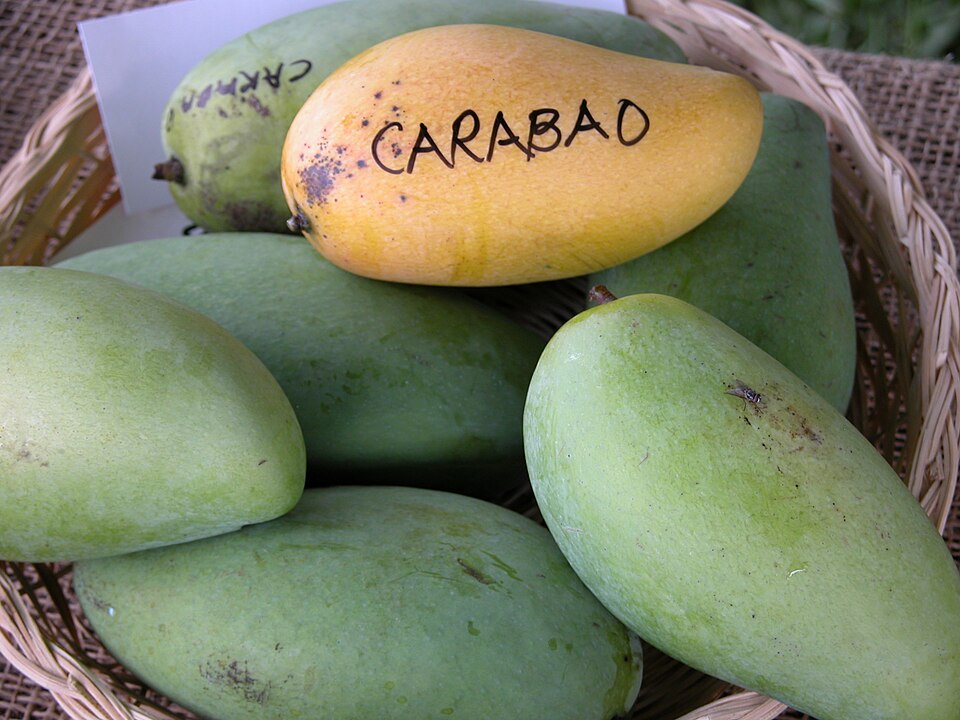
Carabao mangoes at the Tropical Agricultural Fiesta, Fruit and Spice Park, Florida. A yellow labelled fruit sits above green examples.
Carabao FS Asit.JPG — Asit K. Ghosh Thaumaturgist. Photograph source · CC BY-SA 3.0.

Resized for display; complete frame retained. No generative edits.
How it tastes
juicy · Low fibre
- Texture
- juicy
- Fibre
- Low fibre
- Eating styles
- Get sticky
- Harvest
- See regional calendars
How to enjoy it
Carabao is closely associated with the Philippines. Ripe cheeks are an easy introduction to its sweetness; the balance is particularly good when a little acidity remains.
Open over a bowl to catch the juice. Scoop the ripe flesh; strain blended pulp if you prefer less fibre.
When it is ripe
Yellow skin and a floral scent mean go time.
Flavour notes are subjective. Ripeness, handling and growing conditions change the fruit.
Compare this mango · Saved mangoes
Names, history & sources
Recorded names
A shared name does not by itself establish an identical cultivar. Place, language and source matter.
- Carabao
Philippine cultivar name; several strains are documented.
- Philippine mango
A common broader label that may refer to Carabao; it is not proof of a distinct cultivar.
- Manila
Used in some international references; other countries also have separately named Manila selections.
The scientist who changed mango season
Documented history: consult the claims and qualifications in the cited sources.
Carabao is a Philippine cultivar with several recorded strains, shaped by generations of growers. Its modern story includes horticulturist Ramon Barba, who asked why such a loved fruit had to arrive so erratically. Farmers had used smoke to encourage flowering; he investigated a more practical approach.
Barba’s potassium-nitrate work helped growers induce flowering and transformed Philippine mango production. He did not create Carabao: his achievement changed the possibilities for an existing fruit and the people who grew, packed and sold it. The research history belongs beside the older, less fully documented history of the cultivar itself.
Read the full storyPlaces in this record
Country associations alone do not establish botanical origin.
- Philippines
Catalogue association
Associated place in the tasting catalogue; this does not establish botanical origin.
- Philippines
A place in the story
Setting of “The scientist who changed mango season”. Read the story for its evidence and qualifications.
Harvest calendars by growing place. These regional calendars do not specify this cultivar’s exact season.