Harumanis
Aromatic, creamy, and gently resinous with a cult following in Perlis.
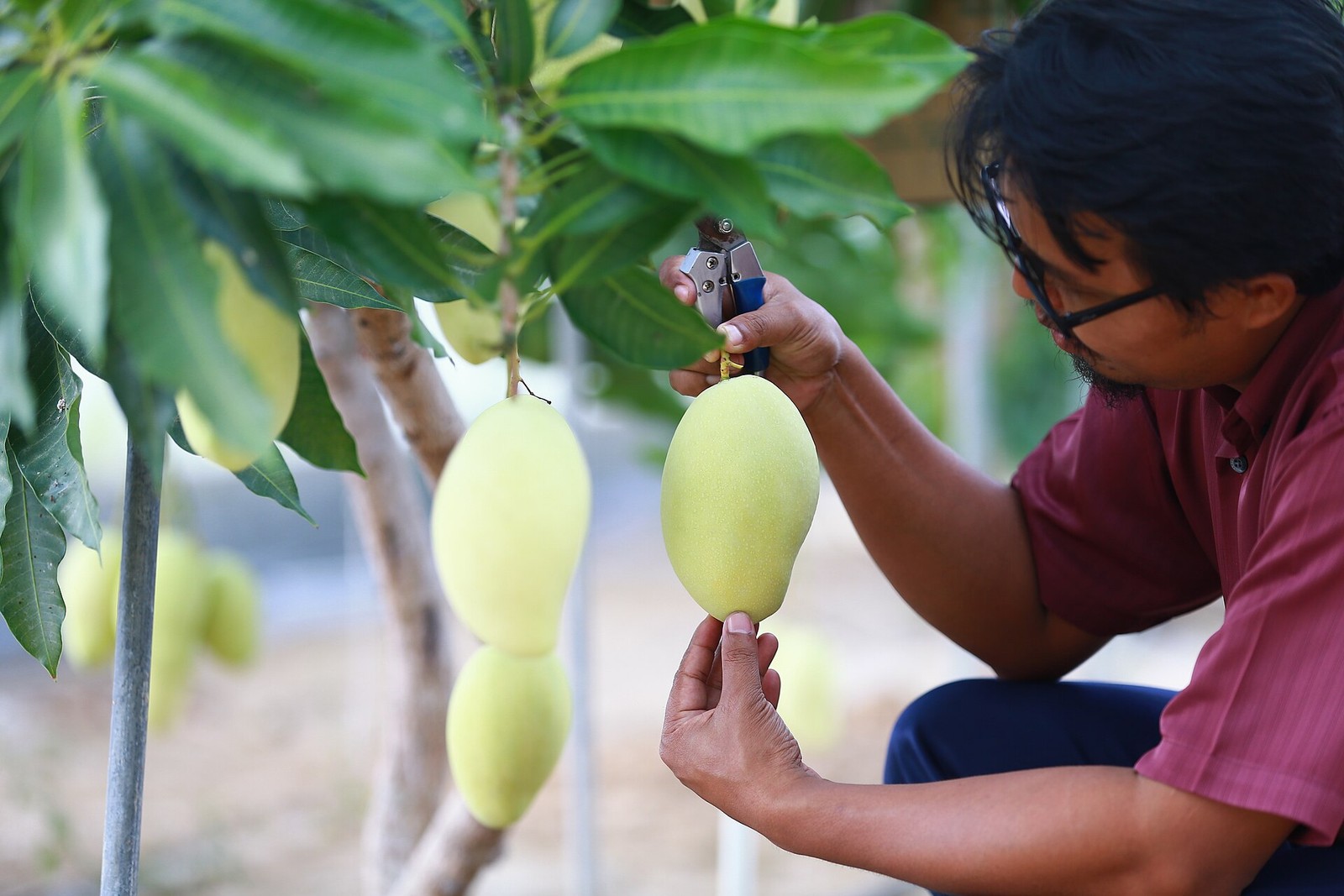
Harumanis fruit on a greenhouse tree, photographed by Azudin1980. Maturity is not specified.
Harumanis under greenhouse.jpg — Azudin1980. Photograph source · CC BY-SA 4.0.

Resized for display; complete frame retained. No generative edits.
How it tastes
Sweet · Perfumed · Resinous
- Texture
- buttery
- Fibre
- Low fibre
- Eating styles
- Bring a spoon
- Harvest
- See regional calendars
How to enjoy it
Harumanis is strongly associated with Perlis. Its green skin can conceal ripe, creamy flesh, and the aroma is a large part of its appeal. A fruit that still looks green may already be ready for the table.
Wait for fragrance and a slight give. Slice the cheeks and taste the soft flesh on its own.
When it is ripe
Skin may stay green or yellow-green; follow the fragrance and gently yielding shoulders.
Flavour notes are subjective. Ripeness, handling and growing conditions change the fruit.
Compare this mango · Saved mangoes
Names, history & sources
Recorded names
A shared name does not by itself establish an identical cultivar. Place, language and source matter.
- Harumanis
- Harumanis / Harum Manis
Malay words referring to fragrance and sweetness.
- MA128
The registered Malaysian selection.
- Mempelam Harumanis
Mempelam is a Malay name for mango, used in Perlis sources.
- Harum Manis
Existing catalogue label. It may be an alternate name, translation or market nickname; it is not an assertion of genetic identity.
- Perlis mango
Existing catalogue label. It may be an alternate name, translation or market nickname; it is not an assertion of genetic identity.
Perlis made it its own
Documented history: consult the claims and qualifications in the cited sources.
Harumanis carries a simple Malay promise: fragrant and sweet. Malaysia’s official account traces the variety to Sungai Nibong in Kuala Selangor, with registration as MA128 on 28 May 1971. Its fame in Perlis came later, as growers and agricultural programmes spread the trees.
Perlis gave it an adopted home and a strong identity. The state’s dry, hot flowering season suits it, and local food culture pairs the ripe fruit with glutinous rice. The name on the box can therefore tell two stories at once: where a selection began, and where people made it their own.
Read the full storyPlaces in this record
Country associations alone do not establish botanical origin.
- Malaysia
Catalogue association
Associated place in the tasting catalogue; this does not establish botanical origin.
- Sungai Nibong, Selangor → Perlis, Malaysia
A place in the story
Setting of “Perlis made it its own”. Read the story for its evidence and qualifications.
Harvest calendars by growing place. These regional calendars do not specify this cultivar’s exact season.