Cát Chu
Silky, floral flesh with a clean sweetness and barely any fiber.
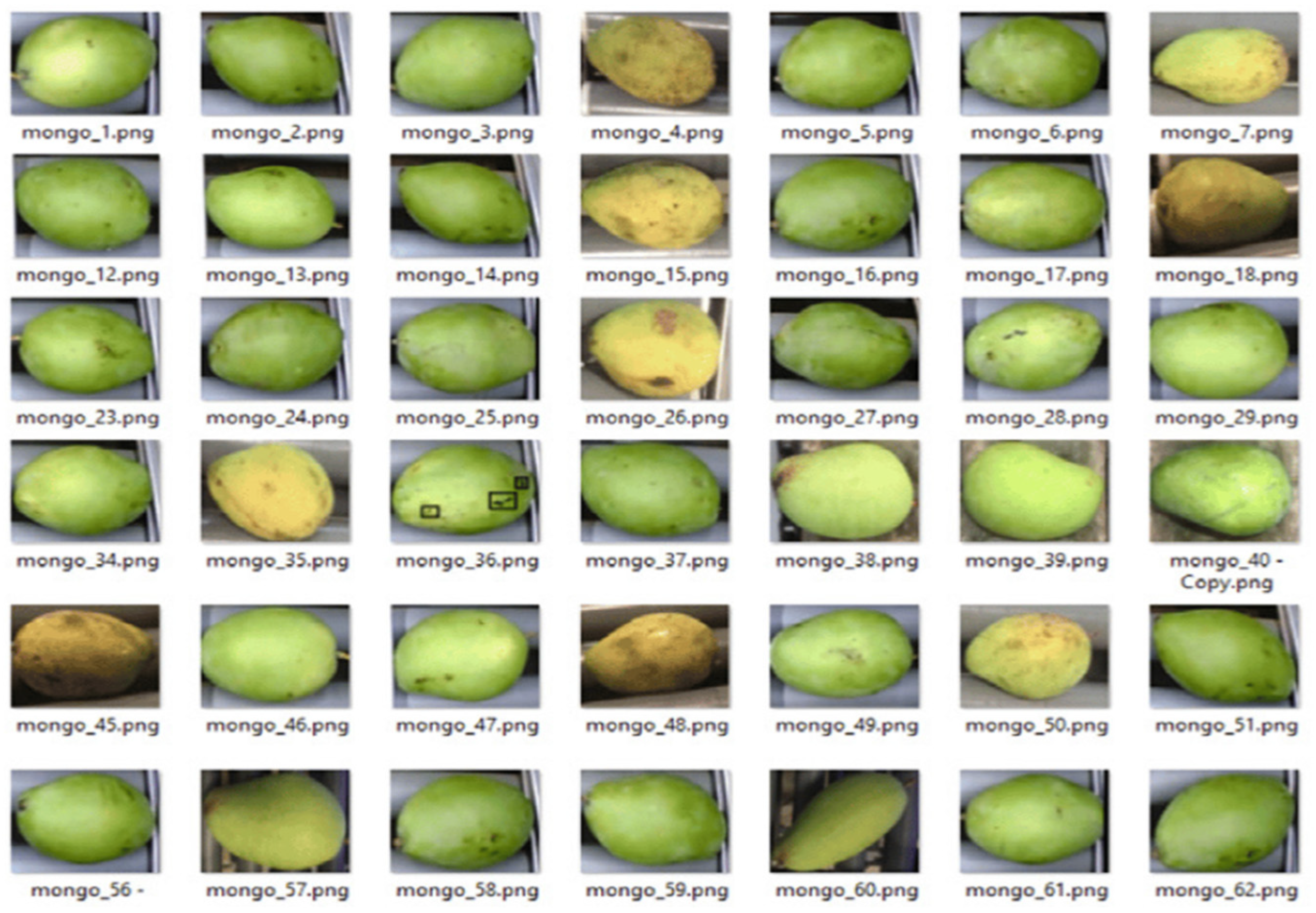
Cat Chu mango samples photographed for a grading study in Dong Thap, Vietnam. Full Figure 6 preserves 42 labeled sample photographs, including green fruit and visibly blemished or deteriorated fruit; it is a dataset overview, not a single representative ripe fruit.
Mango samples — Figure 6, Development of a Mango-Grading and -Sorting System Based on External Features, Using Machine Learning Algorithms — Nguyen Duc Tai, Wei Chih Lin, Nguyen Minh Trieu, Nguyen Truong Thinh. Photograph source · CC BY 4.0.
Original publisher figure; complete frame and sample labels retained. No edits.
How it tastes
buttery · Low fibre
- Texture
- buttery
- Fibre
- Low fibre
- Eating styles
- Bring a spoon
- Harvest
- See regional calendars
How to enjoy it
Cát Chu brings fine-textured sweetness from Vietnam. Give its floral character some space: a few plain ripe slices make a better introduction than a heavily sweetened drink.
Cut ripe cheeks and scoop with a spoon. Taste the flesh plain before adding it to a dessert.
When it is ripe
Yellow types turn golden; green-skinned selections can stay green. Follow aroma and gentle softness.
Flavour notes are subjective. Ripeness, handling and growing conditions change the fruit.
Compare this mango · Saved mangoes
Names, history & sources
Recorded names
A shared name does not by itself establish an identical cultivar. Place, language and source matter.
- Cát Chu
A traditional Đồng Tháp name with competing local explanations.
- Cao Lãnh Cát Chu
Adds the place associated with the protected mango.
- Xoài tiến vua
“Mango offered to the king,” a name associated with the royal tradition.
A little pout, a royal tale
Local tradition: an attributed account, with uncertainty preserved.
Look at the raised stem end. Farmers quoted by Vietnam’s intellectual property office say it resembles pursed lips: “chu miệng.” Another explanation links chu to the colour of the ripe fruit. The official account preserves both explanations instead of pretending the name has one settled origin.
Local tradition also connects the mango with Nguyễn Ánh, later Emperor Gia Long, who is said to have enjoyed the fruit while sheltering in the area. That royal story is a tradition, not a verified cultivar pedigree. The firmer modern record is Cao Lãnh’s geographical indication, granted in 2019: a place keeping its name attached to its fruit.
Read the full storyPlaces in this record
Country associations alone do not establish botanical origin.
- Vietnam
Catalogue association
Associated place in the tasting catalogue; this does not establish botanical origin.
- Cao Lãnh, Đồng Tháp, Vietnam
A place in the story
Setting of “A little pout, a royal tale”. Read the story for its evidence and qualifications.
Harvest calendars by growing place. These regional calendars do not specify this cultivar’s exact season.