All journeys · Food traditions and use
A whole world in a pickle jar.
Tender Appemidi, sliced Totapuri and the western Indian names preserved by pickle makers. Follow mangoes through the kitchen.
Karnataka, Andhra Pradesh and Gujarat
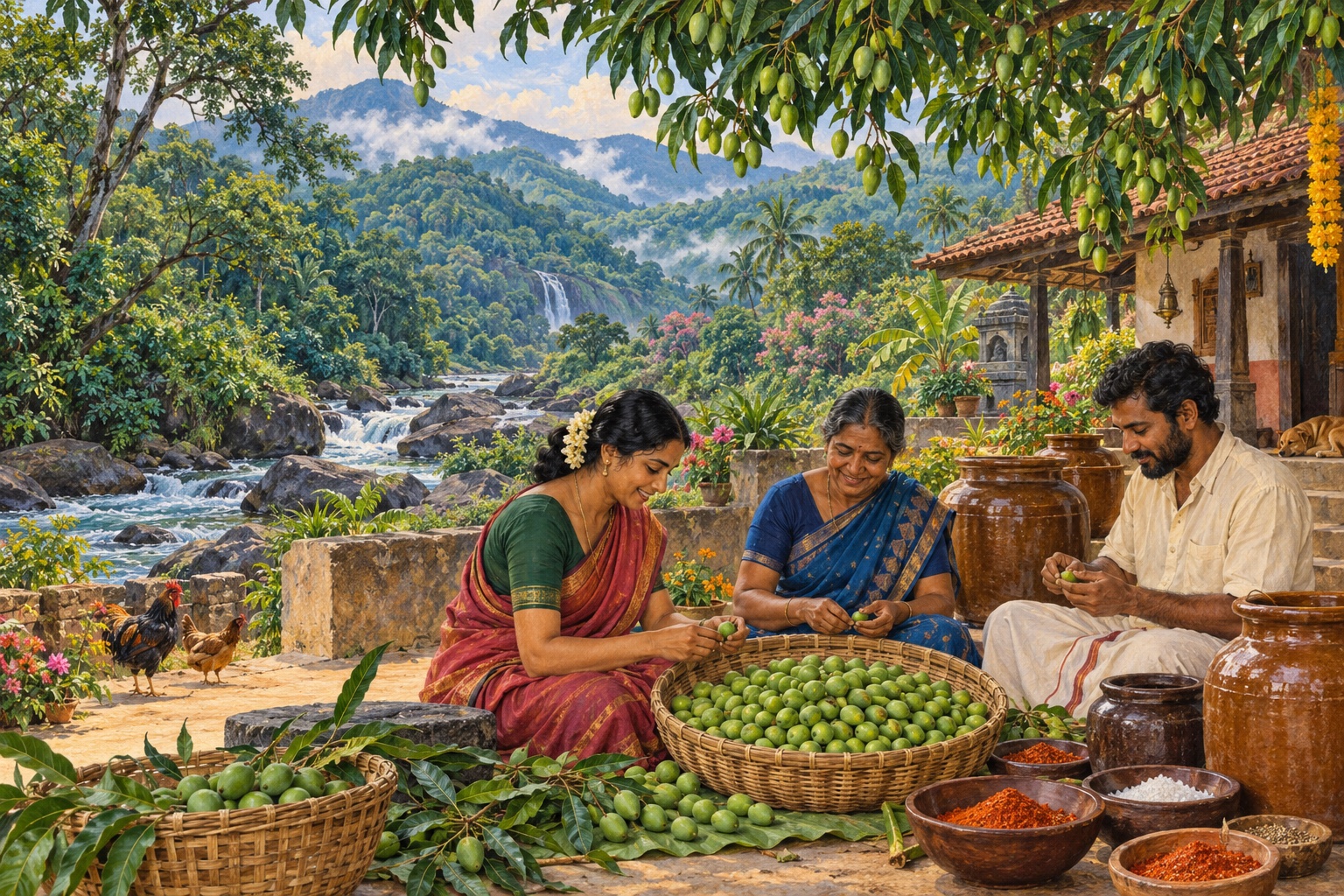
The mango season begins before the dessert bowl is ready. Pickling gives tender fruit, firm slices and distinctive aromas a different purpose. This route follows recorded uses and the people who keep that diversity in cultivation.
Stop 1 · Karnataka · research
One familiar name holds many tender mangoes.
Appemidi
Appe midi
ICAR’s 2023 diversity fair celebrated custodian farmers and a collection of more than 200 Appemidi varieties. Research at IIHR evaluates immature whole mangoes for pickle. Appemidi opens a living field of diversity, with value in the small differences between trees.
Stop 2 · Southern India · record
From a recognisable fruit to a useful slice.
Totapuri
A Ministry of Food Processing Industries study records Totapuri slices in pickle manufacture. The same cultivar also has a substantial life in pulp and drinks. Following its uses brings the kitchen and the processing industry into view.
Stop 3 · Western India · record
A regional favourite enters the preserving kitchen.
Rajapuri
The ministry’s value-chain study names Rajapuri among mangoes used for pickles. Keep that use alongside its regional identity: this is another way a variety earns its place in a household, beyond the ripe-fruit tasting table.
Stop 4 · Gujarat and western India · record
A less-famous name is still worth remembering.
Jamadar
Jamadar also appears in the study’s pickle-making record. Its earliest naming story remains unresolved in this collection, but its practical role is documented. A useful mango deserves a page even while parts of its history are still being researched.
What changes when you judge a mango by its use?
A favourite for eating ripe may not be a cook’s choice for preserving. Keeping the intended use and harvest stage beside the name makes a mango collection much more useful.