Totapuri
Distinctive beaked fruit with bright acidity, firm flesh, and excellent processing range.
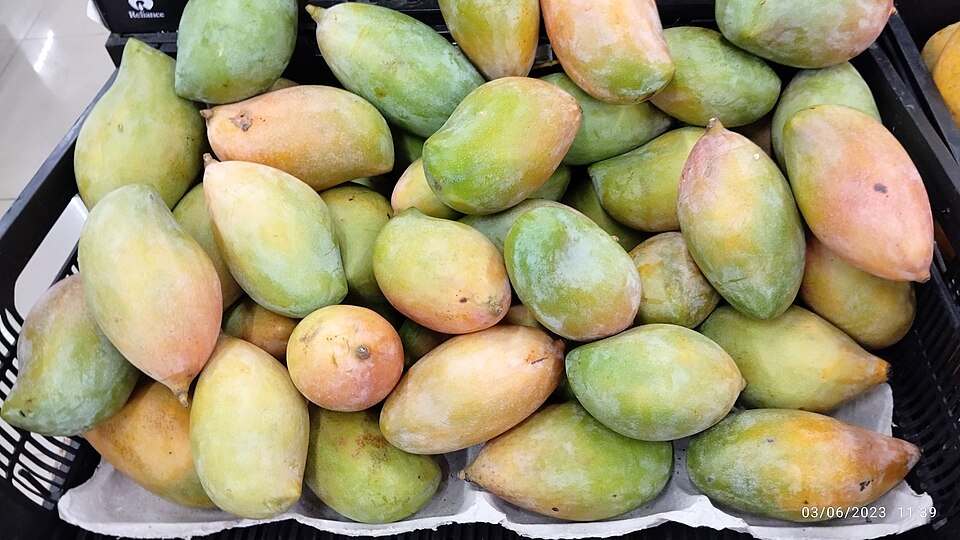
Totapuri mangoes photographed at a market in Mumbai, Maharashtra, by Dr. Raju Kasambe.
Totapuri Mango Indian variety IMG 20230603 113951 (1).jpg — Dr. Raju Kasambe. Photograph source · CC BY-SA 4.0.

Resized for display; complete frame retained. No generative edits.
How it tastes
Tangy · Fresh · Gently sweet
- Texture
- firm
- Fibre
- Some fibre
- Eating styles
- Chilli & salt, Into the pickle jar, Slice & eat, Get sticky
- Harvest
- See regional calendars
How to enjoy it
Look for the hooked tip: the name refers to a parrot’s beak. Totapuri has more than one life in the kitchen. Green and firm, it makes tart, crunchy slices; as it ripens, the flesh becomes sweeter and works well as pulp. The eating stage changes the experience as much as the name on the crate.
For a snack, cut firm green fruit into long wedges and add a little salt and chilli powder. For juice or pulp, let it ripen first.
When it is ripe
Use green for pickle or wait for yellow-orange skin when eating ripe.
Green turns yellow to orange as it ripens. The pointed beak remains an easy identifying feature.
Eating it green
Firm, pale flesh with a sour crunch. Use green fruit for chilli-salt slices or a suitable pickle recipe.
Flavour notes are subjective. Ripeness, handling and growing conditions change the fruit.
Compare this mango · Saved mangoes
Names, history & sources
Recorded names
A shared name does not by itself establish an identical cultivar. Place, language and source matter.
- Totapuri
The familiar name for the distinctive beaked mango.
- Bangalora / Bangalore
Names recorded by Indian horticultural and district sources.
- Kili Mooku
A Tamil local name recorded by Chittoor’s product guide.
- Collector / Sandersha
Additional names recorded in the district guide.
- Bangalora
Existing catalogue label. It may be an alternate name, translation or market nickname; it is not an assertion of genetic identity.
- Sandersha
Existing catalogue label. It may be an alternate name, translation or market nickname; it is not an assertion of genetic identity.
The mango with a parrot’s beak
Documented name: the history of the first tree remains unresolved.
Totapuri’s curved, beak-like tip is the feature people recognise first. The Chittoor district administration records a lively cluster of names for it, including Kili Mooku, Bangalore, Collector and Sandersha. This is a fruit whose shape and travels are easier to trace than its first tree.
The same local record follows it into juice, nectar and preserves. That everyday usefulness is part of its cultural life: the mango can be remembered by a shape, a name shouted across a market, or the taste of a drink. No single verified discovery story emerged from the sources checked here.
Read the full storyPlaces in this record
Country associations alone do not establish botanical origin.
- India
Catalogue association
Associated place in the tasting catalogue; this does not establish botanical origin.
- South India, including Chittoor, Andhra Pradesh
A place in the story
Setting of “The mango with a parrot’s beak”. Read the story for its evidence and qualifications.
Harvest calendars by growing place. These regional calendars do not specify this cultivar’s exact season.