All journeys · India and Pakistan
Names across a border.
Chausa, Chaunsa, Langra, Dusehri. Explore the mango names shared by India and Pakistan, and the distinctions inside them.
Northern India and Pakistan’s mango regions
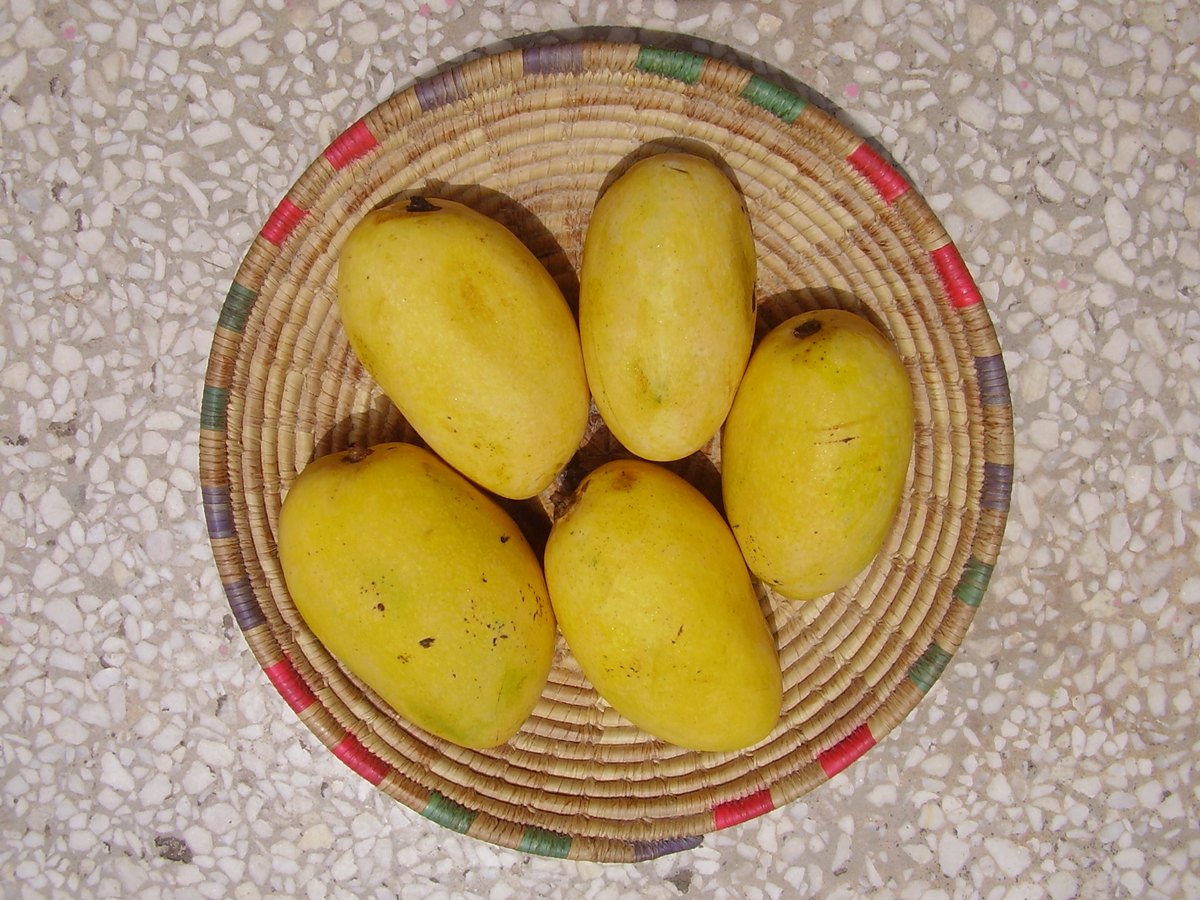
Chaunsa mangoes in a woven tray, identified by the source photographer. Attribution retains the original uploader and the current author field. The photograph does not identify a particular Chaunsa selection.
Chaunsa.JPG — Khalid Mahmood / Jahanzaib Zai. Photograph source · CC BY-SA 3.0.

Resized for display; complete frame retained. No generative edits.
A country guide is one entrance into a mango’s life. Horticultural records from India and Pakistan contain familiar names in different spellings, alongside separately named selections. Read the two records together and a richer picture appears.
Stop 1 · India and Pakistan · record
Read the orchard record beside the familiar name.
Chausa / Chaunsa
Chausa · Chaunsa · Samarbehisht Chausa
TNAU records Samarbehisht Chausa as a chance seedling associated with Sandila in Uttar Pradesh. Pakistan’s Mango Research Institute lists SB Chaunsa. These records give the name a presence in both countries; they do not make every mango sold as Chaunsa an identical selection.
Stop 2 · Pakistan · record
Keep the selection in the name.
White Chaunsa
Sufaid Chaunsa · Safaid Chaunsa
The Multan institute gives Sufaid Chaunsa a separate entry from SB Chaunsa. Keeping “White” or “Sufaid” visible lets a visitor explore the named selection instead of losing it inside a generic Chaunsa page.
Stop 3 · India and Pakistan · record
A name can belong to more than one food culture.
Langra
India’s National Horticulture Board records Langra across several states; Pakistan’s Multan institute also lists it. Its presence in both countries belongs in the guide alongside the Banaras naming tradition explored in its story.
Stop 4 · Northern India and Pakistan · record
A different spelling keeps the trail alive.
Dashehari / Dusehri
Dashehari · Dasheri · Dusehri
The Indian horticultural record uses Dashehari; the Multan institute uses Dusehri. Both spellings deserve a route into the collection. The linked story follows the village association and the remembered mother tree near Lucknow.
When is a familiar name only the beginning?
Shared names connect food cultures. Exact cultivar or selection identity still needs its own evidence, especially when a broad family name appears on a market box.