Dashehari
Fragrant, sweet, and nearly fiberless with a long, elegant finish.
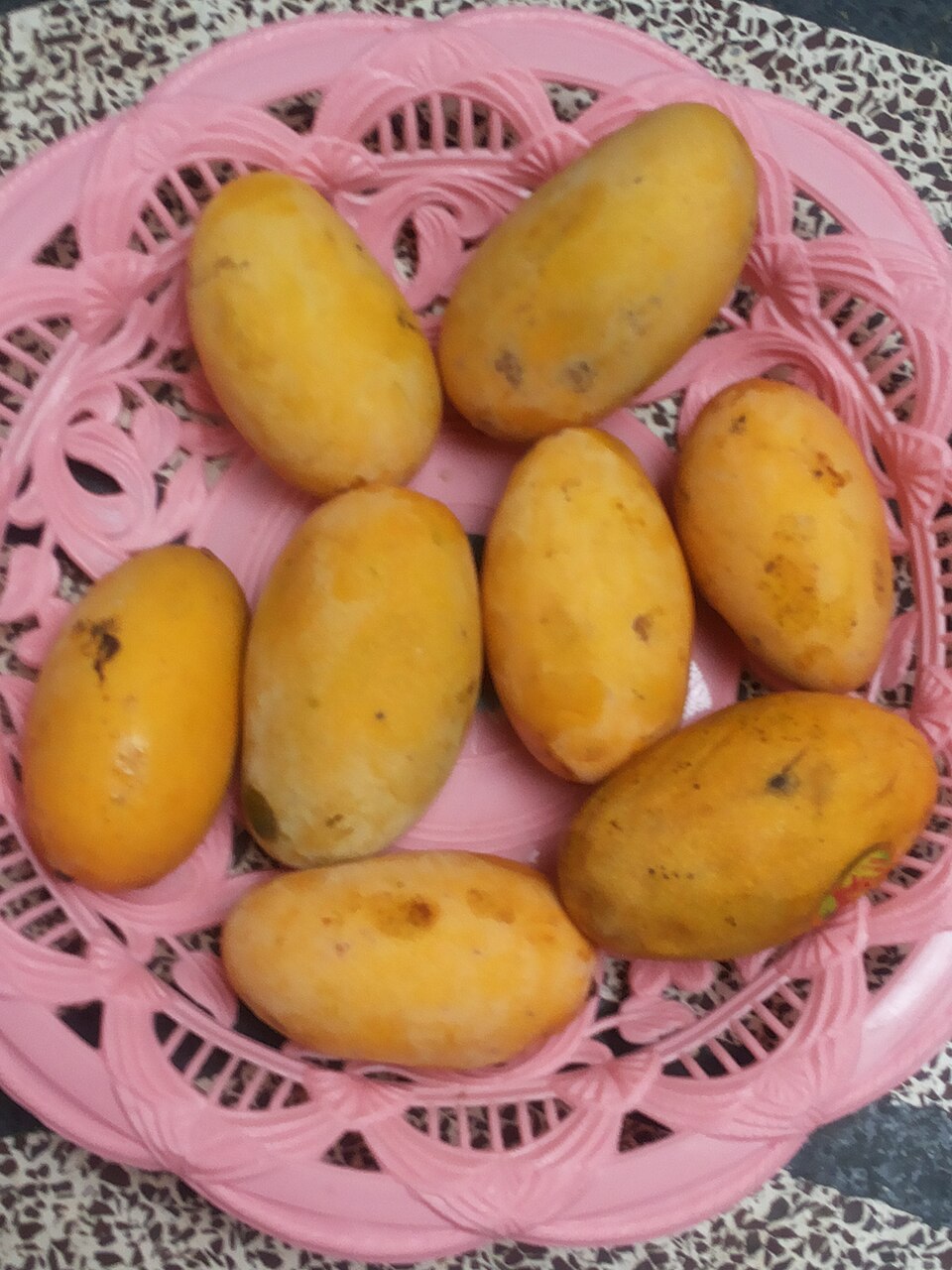
Ripe Dasehri mangoes from Shahdadpur, Sindh, as identified by the photographer.
Ripe Dasehri mangoes from Shahdadpur, Sindh.jpg — Qskb. Photograph source · CC BY-SA 4.0.

Resized for display; complete frame retained. No generative edits.
How it tastes
Sweet · Fragrant · Smooth
- Texture
- buttery
- Fibre
- Low fibre
- Eating styles
- Bring a spoon
- Harvest
- See regional calendars
How to enjoy it
Dashehari is closely associated with the mango-growing belt around Malihabad. Under its long, slender shape is sweet, fine-textured flesh. Give the perfume time to develop before cutting it open.
Slice lengthwise beside the stone and eat the ripe flesh straight from the cheeks.
When it is ripe
Green-yellow skin can be ready; wait for perfume and a soft shoulder.
Flavour notes are subjective. Ripeness, handling and growing conditions change the fruit.
Compare this mango · Saved mangoes
Names, history & sources
Recorded names
A shared name does not by itself establish an identical cultivar. Place, language and source matter.
- Dashehari
- Trade Development Authority of Pakistan: Mango sector (2025)
- Mango Research Institute, Multan: varieties and harvest windows
- Planning Commission / CABI: Mango Cluster Study (2020), Table 3
- Naz et al.: sensory profiling of Multan mango cultivars (2014)
- Bhuwon Sthapit with CISH scientists and farmers: Birthplace of Dashehari mango
- Dusehri
Pakistan
- Dusheri
Pakistan
- Dussehri
Pakistan
Existing catalogue label. It may be an alternate name, translation or market nickname; it is not an assertion of genetic identity.
- Aman Dusehri
Pakistan
- Aman Dusahri
Pakistan
- Dashehari / Dasheri
Spellings of the cultivar named for Dashehari village.
- Malihabad Dusseheri
The regional name recorded in the geographical-indication account.
- دوسہری
Urdu · Pakistan
Urdu spelling recorded in PHDEC’s list of mango varieties.
- Malihabadi
Existing catalogue label. It may be an alternate name, translation or market nickname; it is not an assertion of genetic identity.
A village’s name on millions of lips
Local tradition: an attributed account, with uncertainty preserved.
The name comes from Dashehari village. A field account compiled by biodiversity researcher Bhuwon Sthapit with CISH scientists and local farmers describes its celebrated mother tree and the community around it. CISH collected scion material there in 1977 to propagate selected trees through nurseries.
The account also preserves a local legend: a travelling mango trader quarrelled with a monk who offered shelter, pushed a prized fruit into the earth, and left. The monk cared for the seedling that followed; its fine fruit eventually attracted the landowning nawab’s attention. This is the remembered tale, not a verified planting record.
The tree, the grafts and the story are different ways of keeping an inheritance alive. Dashehari names a mango, but it also keeps the village from disappearing behind the fruit’s fame.
Read the full storyPlaces in this record
Country associations alone do not establish botanical origin.
- India
Catalogue association
Associated place in the tasting catalogue; this does not establish botanical origin.
- Pakistan
Catalogue association
Pakistani spellings of the cultivar covered in the Dashehari profile. Country association records cultivation, rather than a separate botanical origin.
- Dashehari village, near Kakori, Lucknow district, Uttar Pradesh
A place in the story
Setting of “A village’s name on millions of lips”. Read the story for its evidence and qualifications.
Harvest calendars by growing place. These regional calendars do not specify this cultivar’s exact season.
Sources
- Trade Development Authority of Pakistan: Mango sector (2025)
- Mango Research Institute, Multan: varieties and harvest windows
- Planning Commission / CABI: Mango Cluster Study (2020), Table 3
- Naz et al.: sensory profiling of Multan mango cultivars (2014)
- Bhuwon Sthapit with CISH scientists and farmers: Birthplace of Dashehari mango
- Dashehari: variety reference
- PHDEC: Mango cultivation in Pakistan (Urdu, 2023), p. 1