Sein Ta Lone
Smooth, perfumed flesh with a rounded sweetness and a clean finish.
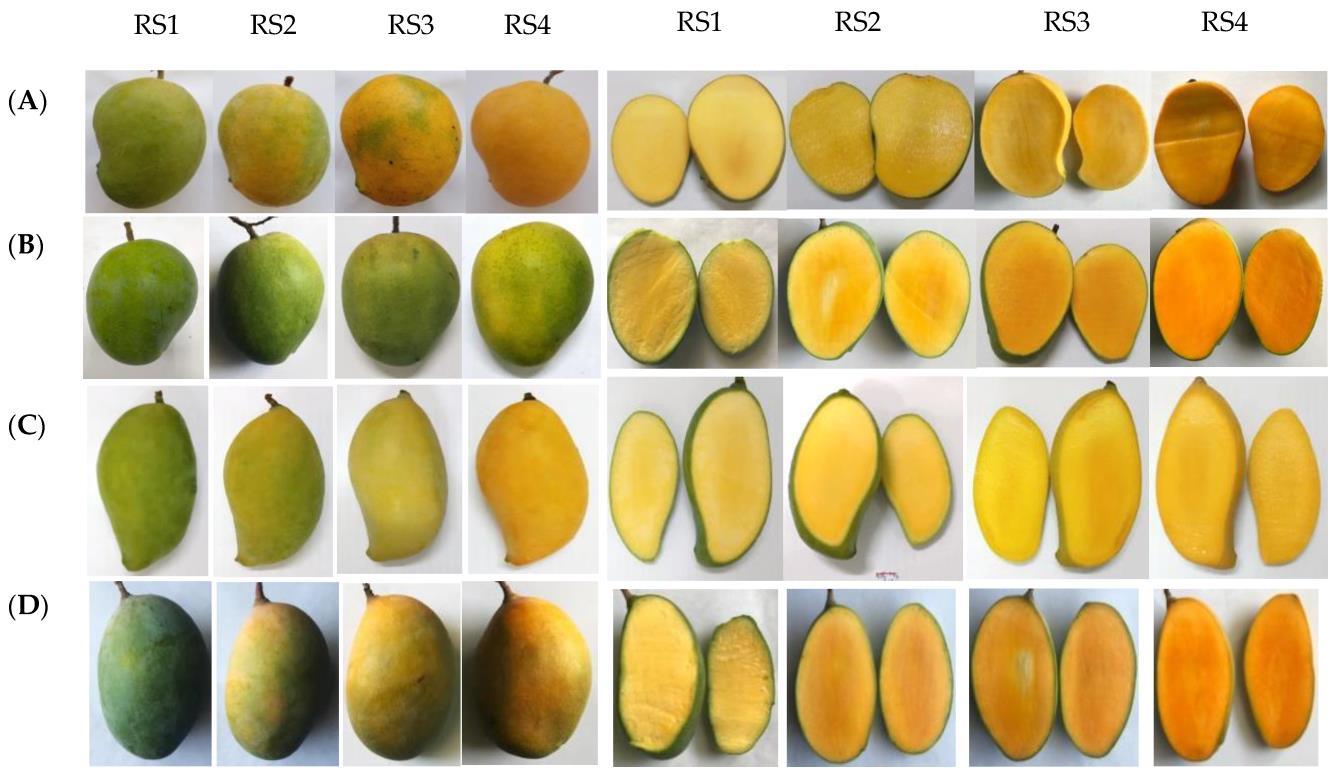
Sein Ta Lone is row A, shown whole and cut across four ripening stages (RS1–RS4). Rows B–D are Ma Chit Su, Hin Thar and Yin Kwae. Full comparison figure from Kyaing and coauthors; labels preserved.
Myanmar mango ripening comparison — Figure 1 — May Sandar Kyaing, San Thandar, Moe Moe Myint, Khaing Phyo Wai, Honey Thet Paing Htwe, Chan Myae Nyein, Jeung-Sul Han and Aung Htay Naing. Photograph source · CC BY 4.0.
Resized for display; complete frame retained. No generative edits.
How it tastes
buttery · Low fibre
- Texture
- buttery
- Fibre
- Low fibre
- Eating styles
- Bring a spoon
- Harvest
- See regional calendars
How to enjoy it
Myanmar’s Sein Ta Lone is often called Diamond Solitaire. Its appeal is concentrated sweetness and smooth flesh: start with the fruit itself before reaching for a blender.
Cut ripe cheeks and scoop with a spoon. Taste the flesh plain before adding it to a dessert.
When it is ripe
Choose full yellow fruit with a floral stem end and slight softness.
Flavour notes are subjective. Ripeness, handling and growing conditions change the fruit.
Compare this mango · Saved mangoes
Names, history & sources
Recorded names
A shared name does not by itself establish an identical cultivar. Place, language and source matter.
- Sein Ta Lone
Romanized name; spacing and spelling vary.
- စိန်တလုံး
Burmese
Burmese name recorded by Myanmar Golden Produce.
- Diamond Solitaire
Common English translation.
- Diamond solitaire
Existing catalogue label. It may be an alternate name, translation or market nickname; it is not an assertion of genetic identity.
A diamond in the orchard
Documented name: the history of the first tree remains unresolved.
Sein Ta Lone is commonly translated as “diamond solitaire.” Myanmar producers use that name with pride for a mango closely associated with the orchards around Mandalay and Sagaing. It is a lovely act of naming: one fruit, held in the hand, imagined as a single precious stone.
The available producer record establishes the Burmese name and its regional home, but not an adequately documented first tree or discoverer. The jewel metaphor is real; stories about exactly who named it need stronger evidence. Its growers’ care, including individually bagging fruit, is a living part of the story.
Read the full storyPlaces in this record
Country associations alone do not establish botanical origin.
- Myanmar
Catalogue association
Associated place in the tasting catalogue; this does not establish botanical origin.
- Mandalay and Sagaing growing regions, Myanmar
A place in the story
Setting of “A diamond in the orchard”. Read the story for its evidence and qualifications.
Harvest calendars by growing place. These regional calendars do not specify this cultivar’s exact season.