Sabre
Strong, resinous mango flavor with a fibrous texture built for juice and chutney.
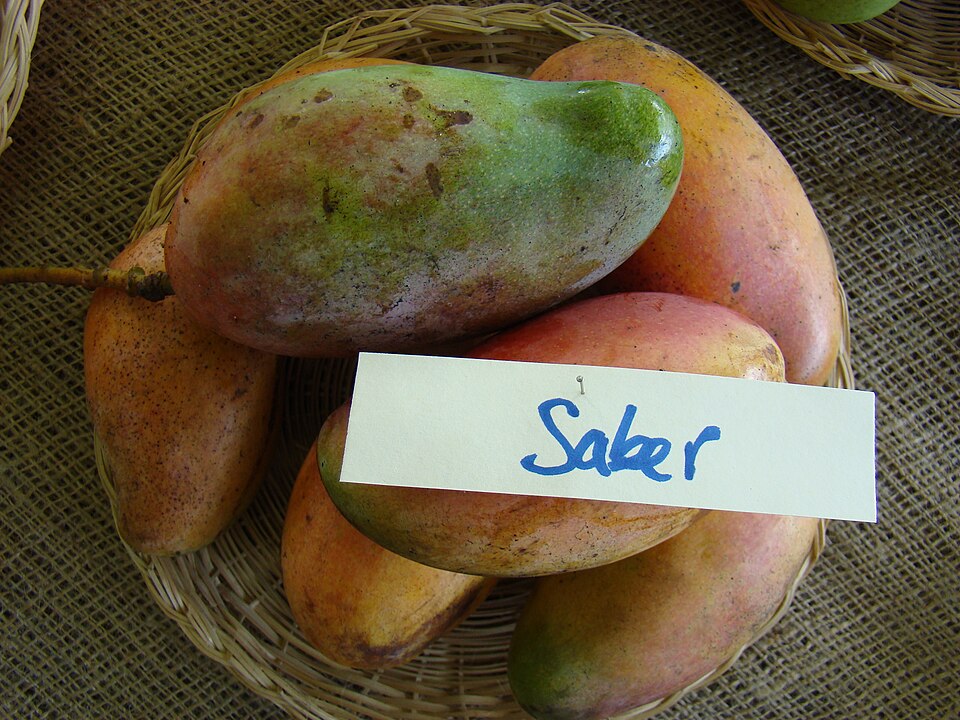
Fruit labeled Saber at the Redland Summer Fruit Festival, Florida. Saber is an alternate spelling of Sabre; maturity is not specified.
Mango Saber Asit fs8.jpg — Asit K. Ghosh (Thaumaturgist). Photograph source · CC BY-SA 3.0.

Resized for display; complete frame retained. No generative edits.
How it tastes
juicy · Fibrous
- Texture
- juicy
- Fibre
- Fibrous
- Eating styles
- Get sticky
- Harvest
- See regional calendars
How to enjoy it
South African Sabre brings a strong mango flavour with plenty of fibre. A strainer can separate the two when you turn ripe pulp into juice.
Open over a bowl to catch the juice. Scoop the ripe flesh; strain blended pulp if you prefer less fibre.
When it is ripe
Look for yellowing skin, softness, and an assertive piney perfume.
Flavour notes are subjective. Ripeness, handling and growing conditions change the fruit.
Compare this mango · Saved mangoes
Names, history & sources
Recorded names
A shared name does not by itself establish an identical cultivar. Place, language and source matter.
- Sabre
Historical South African cultivar and rootstock name.
- Sabel
A spelling encountered in regional catalogues.
The mango underneath the orchard
Documented history: consult the claims and qualifications in the cited sources.
South Africa’s Agricultural Research Council records Peach and Sabre seedlings among the trees planted when commercial mango growing gathered pace around 1920. Before later imported cultivars became familiar, these were part of the foundation of local orchards.
Sabre’s second life is often hidden below the graft. Researchers record it as a major rootstock: the rooted tree supporting another named mango above it. That is a different kind of legacy, easy to miss when the label names only the fruit at the top. The original discoverer and naming event remain unestablished here.
Read the full storyPlaces in this record
Country associations alone do not establish botanical origin.
- South Africa
Catalogue association
Associated place in the tasting catalogue; this does not establish botanical origin.
- South Africa, including the early Ofcolaco and Malelane orchards
A place in the story
Setting of “The mango underneath the orchard”. Read the story for its evidence and qualifications.
Harvest calendars by growing place. These regional calendars do not specify this cultivar’s exact season.