Okrung
Very sweet, low-acid flesh with an old-school fibrous texture.
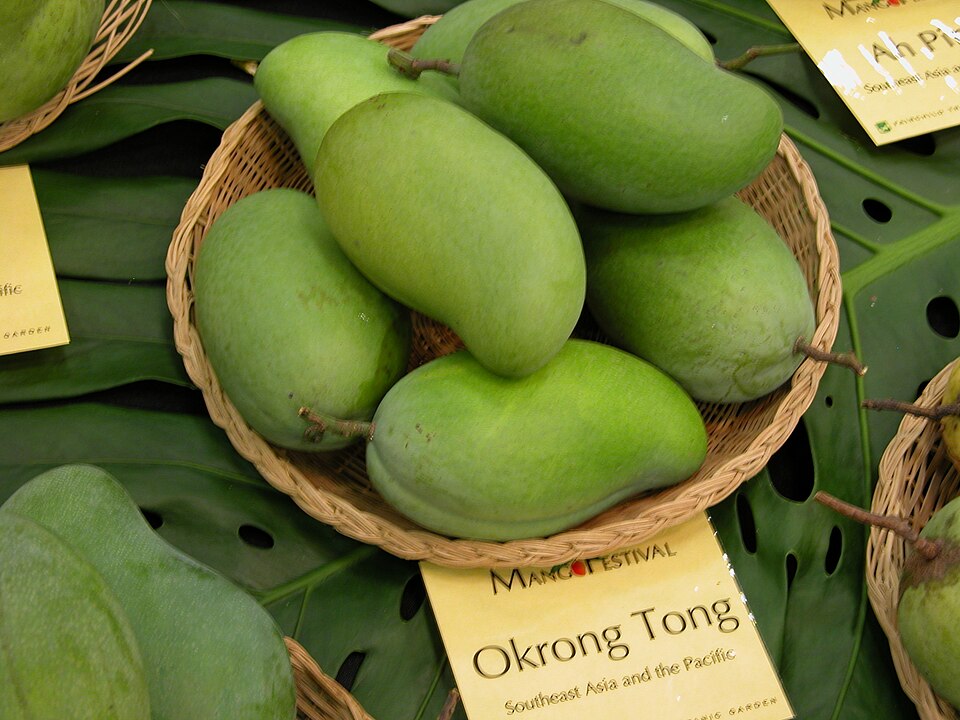
Okrong Tong selection at the Fairchild Tropical Botanic Garden mango festival. Maturity is not specified.
Mango OkrongTong Asit ftg.jpg — Asit K. Ghosh Thaumaturgist. Photograph source · CC BY-SA 3.0.

Resized for display; complete frame retained. No generative edits.
How it tastes
juicy · Fibrous
- Texture
- juicy
- Fibre
- Fibrous
- Eating styles
- Get sticky
- Harvest
- See regional calendars
How to enjoy it
Okrung is a very sweet Thai mango with more fibre than some dessert varieties. Pairing it with chewy rice and coconut makes texture part of the pleasure.
Open over a bowl to catch the juice. Scoop the ripe flesh; strain blended pulp if you prefer less fibre.
When it is ripe
The skin can stay green; follow full perfume and gently yielding flesh.
Flavour notes are subjective. Ripeness, handling and growing conditions change the fruit.
Compare this mango · Saved mangoes
Names, history & sources
Recorded names
A shared name does not by itself establish an identical cultivar. Place, language and source matter.
- Okrung
- Okrung / Okrong / Ok Rong
Romanizations used in grower and culinary records.
- Oc-rong
Spelling used by Thailand’s Department of Agricultural Extension.
- อกร่อง
Thai · Thailand
The extension catalogue records this broad name alongside qualified Okrong names, including Thong, Khiao and Phikunthong. Those selections are not merged here.
- Ok Rong
Existing catalogue label. It may be an alternate name, translation or market nickname; it is not an assertion of genetic identity.
The old companion to sticky rice
Documented name: the history of the first tree remains unresolved.
Ok Rong is one of the mangoes traditionally paired with coconut sticky rice. Thai restaurant accounts translate its name through the fruit’s cleft shape. The words keep an everyday observation alive, rather than naming a king, breeder or town.
English records spell it Okrung, Okrong, Ok Rong and Oc-rong. Thai research also distinguishes multiple Ok Rong selections, so the broad name should not erase those differences. A single first tree is not established in the sources here; the enduring place at the dessert table is.
Read the full storyPlaces in this record
Country associations alone do not establish botanical origin.
- Thailand
Catalogue association
Associated place in the tasting catalogue; this does not establish botanical origin.
- Thailand
A place in the story
Setting of “The old companion to sticky rice”. Read the story for its evidence and qualifications.
Harvest calendars by growing place. These regional calendars do not specify this cultivar’s exact season.