Mallika
A 1970s Indian hybrid with concentrated citrus, melon, and honey notes.
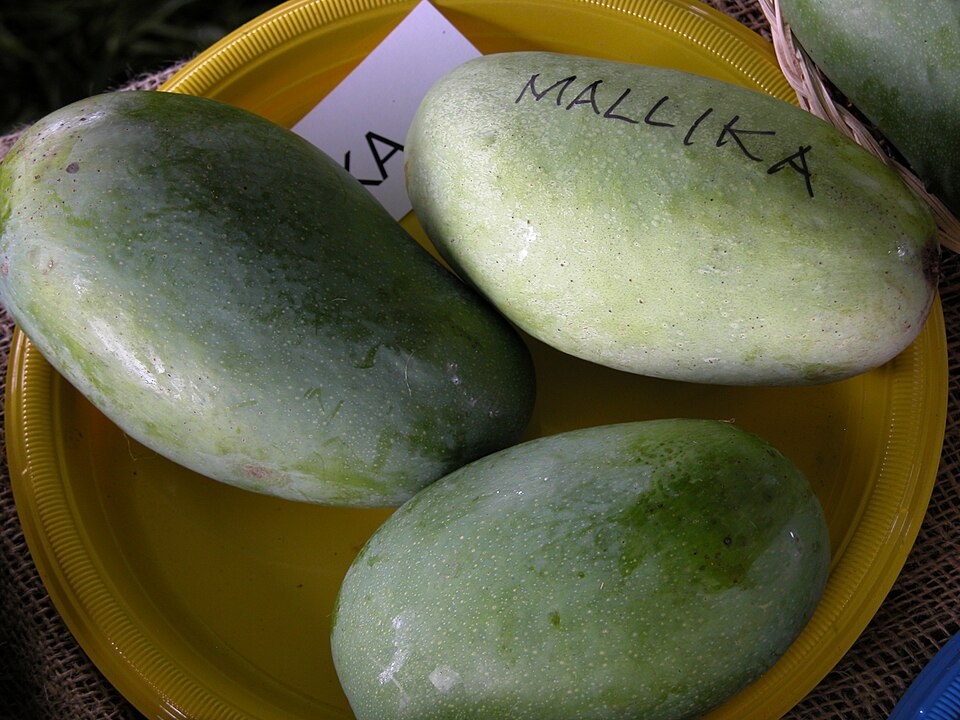
Mallika mangoes at Fruit and Spice Park, Homestead, Florida. Maturity is not specified.
Mango Mallika Asit fs.jpg — Thaumaturgist. Photograph source · CC BY-SA 3.0.

Resized for display; complete frame retained. No generative edits.
How it tastes
Citrus · Melon · Honey
- Texture
- buttery
- Fibre
- Low fibre
- Eating styles
- Bring a spoon
- Harvest
- See regional calendars
How to enjoy it
Mallika comes from Neelum and Dashehari parentage. Its appeal lies in a concentrated flavour that can suggest citrus, melon and honey. Let a mature fruit ripen properly before judging it; a hard bite misses the point.
Wait for fragrance and gentle softness. Cut into cheeks and serve in thick, ripe slices.
When it is ripe
Pick mature-green, then ripen off the tree until fully yellow and fragrant.
Flavour notes are subjective. Ripeness, handling and growing conditions change the fruit.
Compare this mango · Saved mangoes
Names, history & sources
Recorded names
A shared name does not by itself establish an identical cultivar. Place, language and source matter.
- Mallika
The released cultivar name.
- மல்லிகா
Tamil · Tamil Nadu, India
Tamil spelling recorded in TNAU’s mango cultivation guide.
Two old favourites, one new mango
Documented history: consult the claims and qualifications in the cited sources.
Mallika was released in 1971 from the cross Neelum × Dashehari. ICAR’s account places it among the achievements of Indian horticulture after Independence. An origin story can begin with a research orchard: flowers chosen, seedlings watched, and years of waiting to taste the result.
Its companion Amrapali uses the same two parents in the opposite direction. They are distinct varieties, not interchangeable names. In Mallika, the documented result was a large fruit with firm, fibreless flesh and an appealing flavour—a new mango built from the qualities of two established favourites.
Read the full storyPlaces in this record
Country associations alone do not establish botanical origin.
- India
Catalogue association
Associated place in the tasting catalogue; this does not establish botanical origin.
- Indian Agricultural Research Institute, New Delhi
A place in the story
Setting of “Two old favourites, one new mango”. Read the story for its evidence and qualifications.
Harvest calendars by growing place. These regional calendars do not specify this cultivar’s exact season.