Julie
Spicy, floral, and full-bodied; it has opinions.
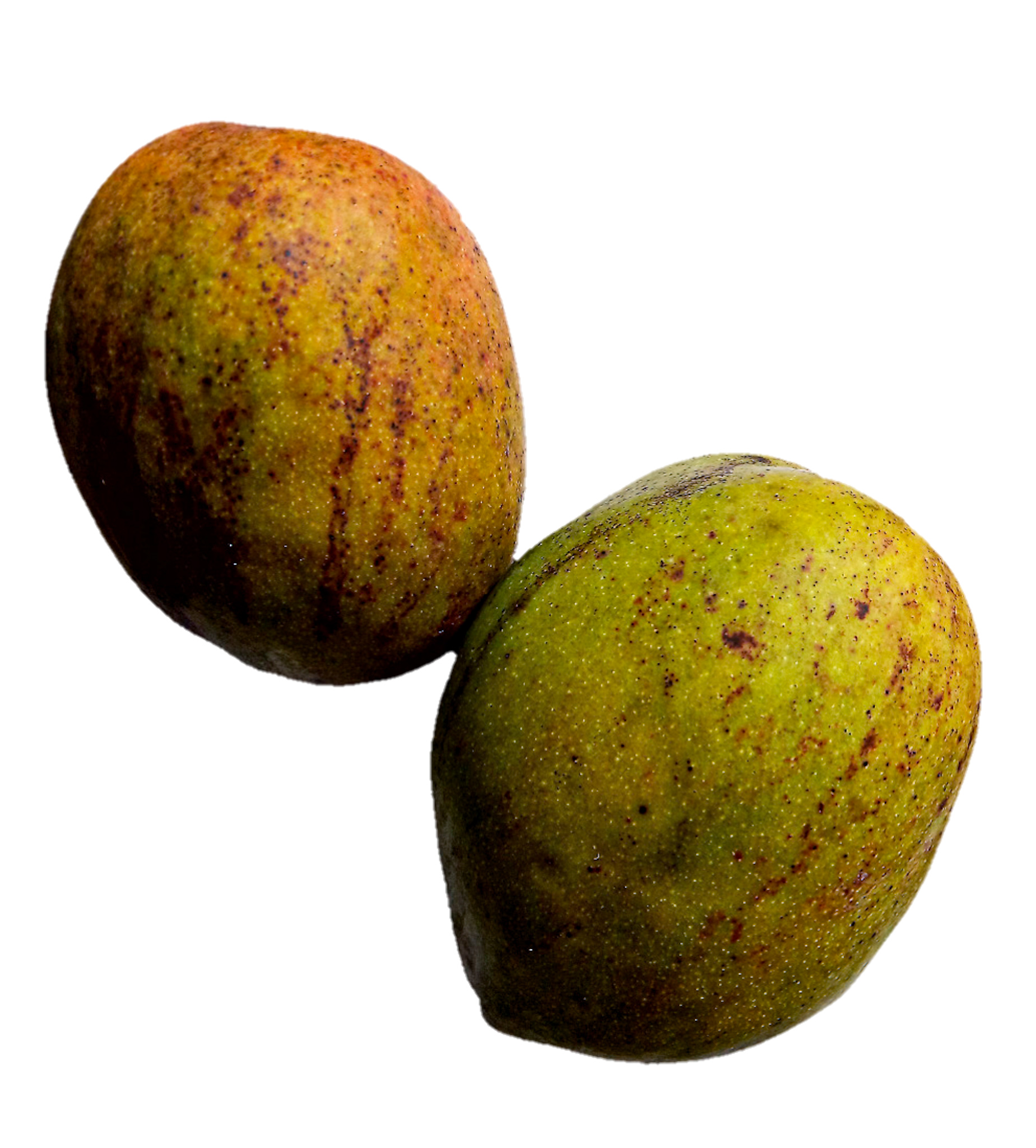
Two intact Julie mangoes photographed by Filo gèn’ on a white background. Individual fruit and maturity vary.
'Julie' mango on white background.jpg — Filo gèn' · © 2020 Studio lab 1. Photograph source · CC BY-SA 4.0.

Original source file; no edits.
How it tastes
buttery · Low fibre
- Texture
- buttery
- Fibre
- Low fibre
- Eating styles
- Bring a spoon
- Harvest
- See regional calendars
How to enjoy it
Julie brings a distinctly aromatic Caribbean personality. The flesh can suggest spice as well as sweetness; taste a cheek plain before deciding what to pair with it.
Cut ripe cheeks and scoop with a spoon. Taste the flesh plain before adding it to a dessert.
When it is ripe
Green can be ready—trust the aroma and gentle softness.
Flavour notes are subjective. Ripeness, handling and growing conditions change the fruit.
Compare this mango · Saved mangoes
Names, history & sources
Recorded names
A shared name does not by itself establish an identical cultivar. Place, language and source matter.
- Julie
Established Caribbean cultivar name.
- Saint Julien / St. Julian
Names used for Julie in some records; local identification still matters.
- St. Julian
Existing catalogue label. It may be an alternate name, translation or market nickname; it is not an assertion of genetic identity.
A Caribbean family tree
Documented name: the history of the first tree remains unresolved.
Julie belongs to the shared mango culture of the Caribbean. Growers disagree about its precise island of origin, and older accounts do not all tell the same story. What is clear is its affectionately held place in Trinidad and Jamaica, where its name means much more than a nursery label.
A recorded introduction took Julie to Florida in 1907. Its family continued there: growers trace Sophie Frey, and through her Carrie, back to Julie. That makes a bite of a Florida favourite a small connection to Caribbean gardens. We keep the disputed birthplace open rather than give one island exclusive ownership of a shared story.
Read the full storyPlaces in this record
Country associations alone do not establish botanical origin.
- Trinidad & Tobago
Catalogue association
Associated place in the tasting catalogue; this does not establish botanical origin.
- Trinidad and Tobago
Catalogue association
Associated country guide; cultivation, naming and origin are different claims.
- Caribbean; strongly associated with Trinidad and Jamaica
A place in the story
Setting of “A Caribbean family tree”. Read the story for its evidence and qualifications.
- Jamaica
A recorded historical connection
Place associated in the cited history; this is not a claim of botanical origin.
Harvest calendars by growing place. These regional calendars do not specify this cultivar’s exact season.