Itamaracá
A small Brazilian mango with layered, creamy sweetness.
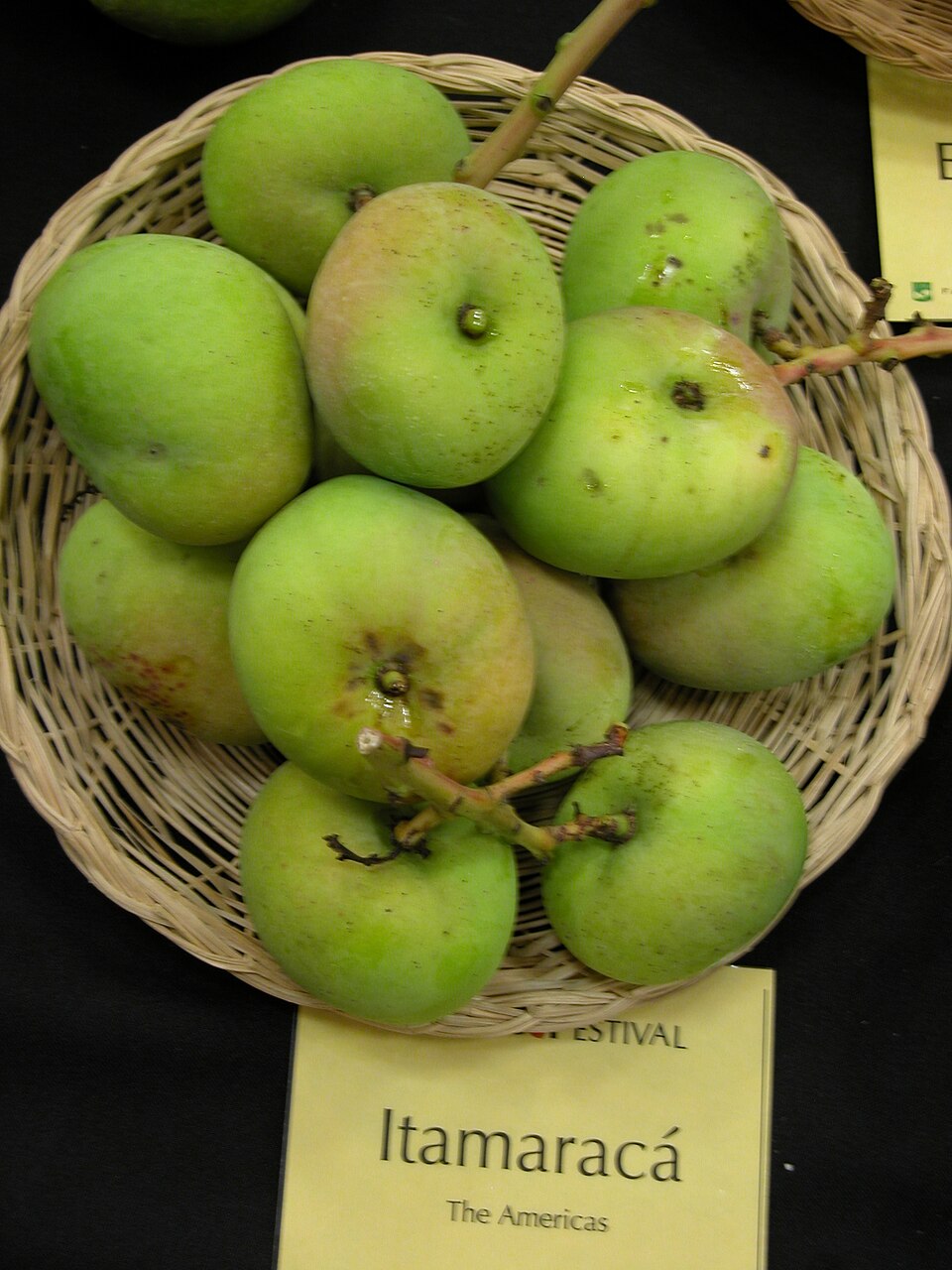
Itamaracá mangoes displayed at Fairchild Tropical Botanic Garden, Florida. Maturity is not specified.
Mango Itamaraca Asit.ftg.jpg — Asit K. Ghosh (Thaumaturgist). Photograph source · CC BY-SA 3.0.

Resized for display; complete frame retained. No generative edits.
How it tastes
buttery · Low fibre
- Texture
- buttery
- Fibre
- Low fibre
- Eating styles
- Bring a spoon
- Harvest
- See regional calendars
How to enjoy it
Brazilian Itamaracá offers a compact fruit with layered sweetness. Eat a ripe cheek slowly; its soft texture rewards a spoon more than elaborate preparation.
Cut ripe cheeks and scoop with a spoon. Taste the flesh plain before adding it to a dessert.
When it is ripe
Let it soften evenly until its concentrated perfume comes forward.
Flavour notes are subjective. Ripeness, handling and growing conditions change the fruit.
Compare this mango · Saved mangoes
Names, history & sources
Recorded names
A shared name does not by itself establish an identical cultivar. Place, language and source matter.
- Itamaracá
- Itamaracá / Itamaraca
Portuguese name, often written without the accent in English catalogues.
- Brazilian Itamaracá
A geographical description, not another cultivar.
An island you can hold in your hand
Documented history: consult the claims and qualifications in the cited sources.
Embrapa records Itamaracá as originating on the island of the same name in Pernambuco. The place has stayed attached to the mango as trees have been moved and propagated elsewhere.
The name is the most secure thread through its story. Growers outside Brazil report variation in the material they encounter, so we do not claim every tree sold as Itamaracá is an identical clone. The original selector is not established here; the island connection is.
Read the full storyPlaces in this record
Country associations alone do not establish botanical origin.
- Brazil
Catalogue association
Associated place in the tasting catalogue; this does not establish botanical origin.
- Itamaracá Island, Pernambuco, Brazil
A place in the story
Setting of “An island you can hold in your hand”. Read the story for its evidence and qualifications.
Harvest calendars by growing place. These regional calendars do not specify this cultivar’s exact season.