Himsagar
Deeply sweet, almost fiberless flesh with a brief, fiercely anticipated season.
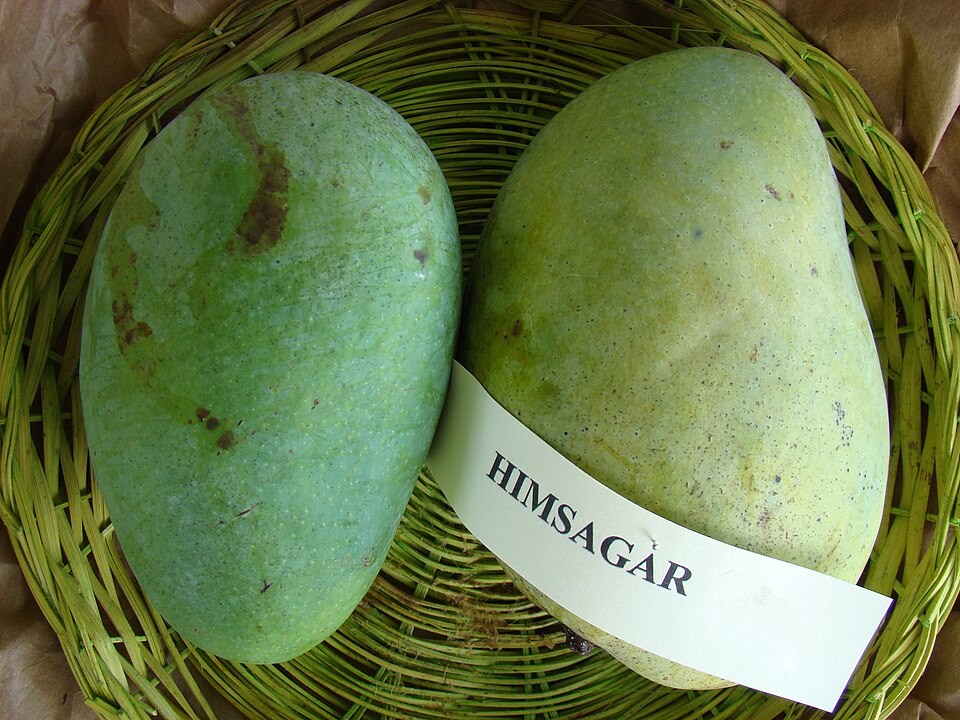
Himsagar mangoes displayed at the Redland Summer Fruit Festival, Fruit and Spice Park, Florida. Maturity is not specified.
Mango Himsagar Asit fs8.jpg — Asit K. Ghosh Thaumaturgist. Photograph source · CC BY-SA 3.0.

Resized for display; complete frame retained. No generative edits.
How it tastes
Sweet · Rich · Fragrant
- Texture
- buttery
- Fibre
- Low fibre
- Eating styles
- Bring a spoon
- Harvest
- See regional calendars
How to enjoy it
Himsagar is a prized Bengal mango with fine, low-fibre flesh. The appeal is direct: a rich, sweet mouthful without much stringiness. Follow the aroma rather than waiting for a dramatic change of skin colour.
Cut ripe cheeks and eat them plain, with a spoon if the flesh is very soft.
When it is ripe
The skin may stay green; fragrance and a yielding shoulder are the clues.
Flavour notes are subjective. Ripeness, handling and growing conditions change the fruit.
Compare this mango · Saved mangoes
Names, history & sources
Recorded names
A shared name does not by itself establish an identical cultivar. Place, language and source matter.
- Himsagar
India
Name used across Bengal and in the Indian regional registration.
- Khirsapati
Spelling in the registered name Malda Khirsapati (Himsagar) Mango.
- Khirsapat
Spelling used alongside Himsagar in a BARI field report; local usage can vary.
Bengal, spoken in more than one mango name
Documented name: the history of the first tree remains unresolved.
India’s geographical-indication register preserves a revealing double name: Malda Khirsapati (Himsagar) Mango. In Bangladesh, BARI’s field reports also use Khirsapat/Himsagar together. Both records place the names inside a living Bengal mango culture, rather than assigning the whole story to one modern country.
Local naming is not always perfectly consistent, and closely related market names can conceal distinctions growers care about. These sources document the connection between the names; they do not establish a single discoverer or explain who first named the fruit. That part of the story remains open.
Read the full storyPlaces in this record
Country associations alone do not establish botanical origin.
- Bangladesh
Catalogue association
Associated place in the tasting catalogue; this does not establish botanical origin.
- India
Catalogue association
NHB records Himsagar among cultivars grown in Bihar, Jharkhand, and West Bengal.
- Malda and wider Bengal, including growing regions of Bangladesh
A place in the story
Setting of “Bengal, spoken in more than one mango name”. Read the story for its evidence and qualifications.
Harvest calendars by growing place. These regional calendars do not specify this cultivar’s exact season.