Francis
Haiti’s popular strong-flavored mango brings loud perfume, orange flesh, and plenty of juice.
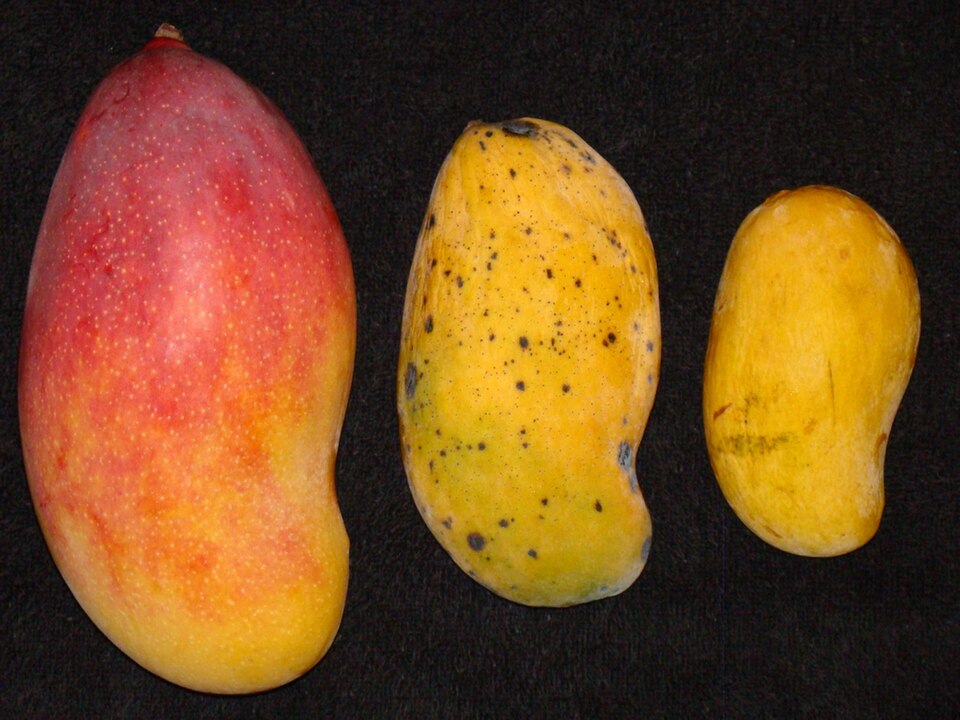
Madame Francis from Haiti in the middle; Valencia Pride on the left and Ataulfo on the right.
Mango VALENCIA PRIDE MADAME FRANCIS ATAULFO Asit.jpg — Asit K. Ghosh (Thaumaturgist). Photograph source · CC BY-SA 3.0.

Resized for display; complete frame retained. No generative edits.
How it tastes
juicy · Some fibre
- Texture
- juicy
- Fibre
- Some fibre
- Eating styles
- Get sticky
- Harvest
- See regional calendars
How to enjoy it
Madame Francis offers a strong aroma and juicy orange flesh. Some fibre comes with that character; eat ripe cheeks over a bowl or blend and strain for a smooth drink.
Open over a bowl to catch the juice. Scoop the ripe flesh; strain blended pulp if you prefer less fibre.
When it is ripe
Look for full gold color and softness around the shoulder.
Flavour notes are subjective. Ripeness, handling and growing conditions change the fruit.
Compare this mango · Saved mangoes
Names, history & sources
Recorded names
A shared name does not by itself establish an identical cultivar. Place, language and source matter.
- Francis
- Francis / Madame Francis
Names used in English-language trade.
- Francique / Francisque
Haitian and horticultural spellings recorded for the mango.
- Madame Francis
Existing catalogue label. It may be an alternate name, translation or market nickname; it is not an assertion of genetic identity.
- Haitian mango
Existing catalogue label. It may be an alternate name, translation or market nickname; it is not an assertion of genetic identity.
Haiti’s name on the fruit box
Documented name: the history of the first tree remains unresolved.
Madame Francis, Francis and Francique are names used for this Haitian mango. Horticultural records document its importance to Haiti’s export trade, carrying a familiar local fruit into shops abroad.
Grower Walter Zill recalled encountering it on seed-collecting trips to Haiti and enjoying mature fruit there. That is a documented personal encounter, but it does not tell us who the original “Madame” was. We leave that tempting biographical story open instead of inventing a woman to fit the name.
Read the full storyPlaces in this record
Country associations alone do not establish botanical origin.
- Haiti
Catalogue association
Associated place in the tasting catalogue; this does not establish botanical origin.
- Haiti
A place in the story
Setting of “Haiti’s name on the fruit box”. Read the story for its evidence and qualifications.
Harvest calendars by growing place. These regional calendars do not specify this cultivar’s exact season.