East Indian
Powerful piney perfume, vivid sweetness, and plenty of old-school fiber.
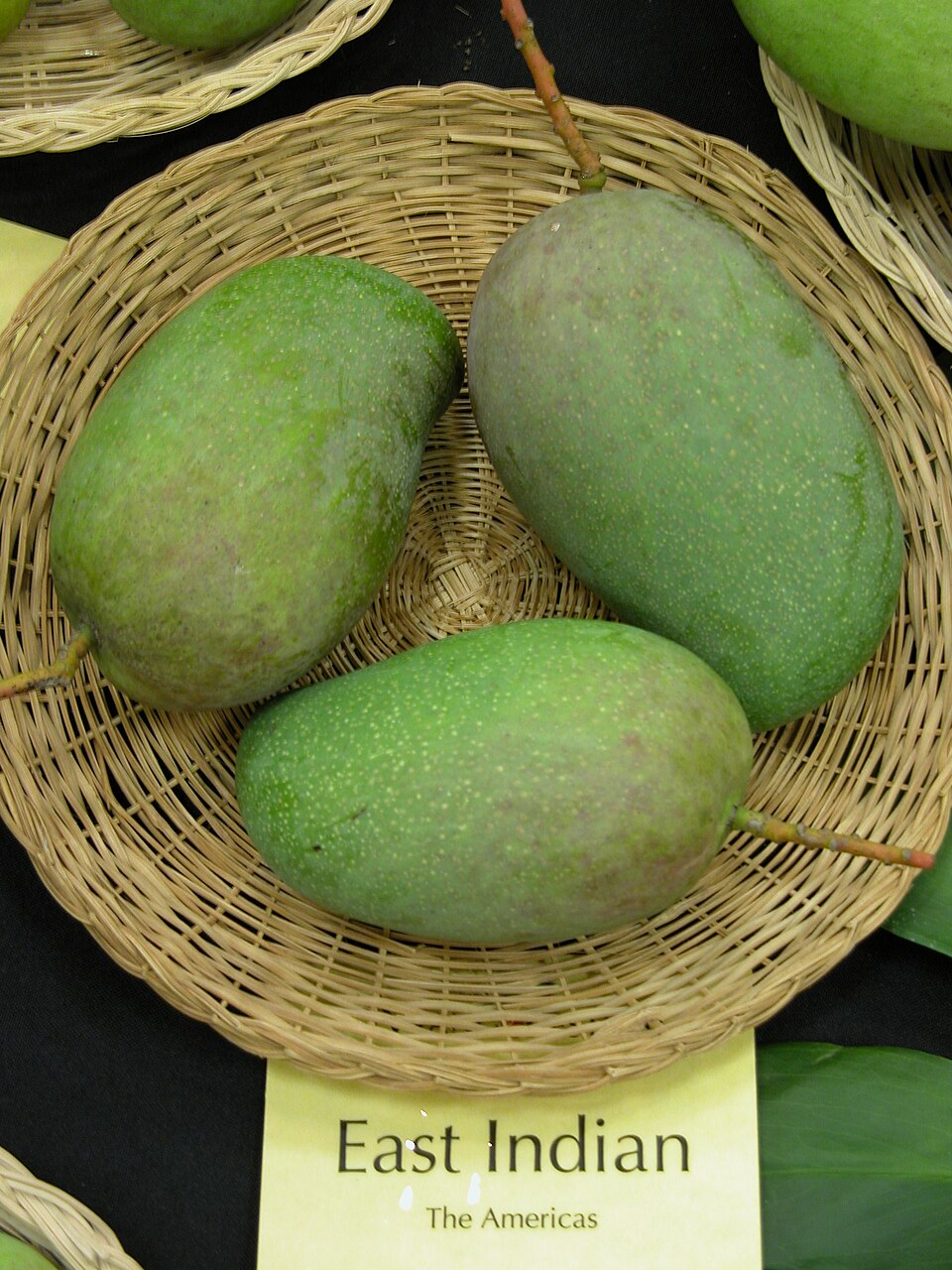
East Indian mangoes displayed at Fairchild Tropical Botanic Garden, Florida. Maturity is not specified.
Mango EastIndian Asit ftg.jpg — Asit K. Ghosh (Thaumaturgist). Photograph source · CC BY-SA 3.0.

Resized for display; complete frame retained. No generative edits.
How it tastes
juicy · Fibrous
- Texture
- juicy
- Fibre
- Fibrous
- Eating styles
- Get sticky
- Harvest
- See regional calendars
How to enjoy it
East Indian mangoes are known in Jamaica for assertive flavour. The piney aroma and fibres are part of the experience; this is a fruit to eat slowly or press for juice.
Open over a bowl to catch the juice. Scoop the ripe flesh; strain blended pulp if you prefer less fibre.
When it is ripe
Let the skin turn yellow-red and the whole kitchen smell like mango.
Flavour notes are subjective. Ripeness, handling and growing conditions change the fruit.
Compare this mango · Saved mangoes
Names, history & sources
Recorded names
A shared name does not by itself establish an identical cultivar. Place, language and source matter.
- East Indian
Established Jamaican mango name; not a claim that all Indian mangoes are this cultivar.
- East Indian mango
Existing catalogue label. It may be an alternate name, translation or market nickname; it is not an assertion of genetic identity.
An Indian name, a Jamaican home
Documented name: the history of the first tree remains unresolved.
East Indian is deeply associated with Jamaica. Grower records suggest a relationship to the juicy Rasalu mango types carried from southern India during the nineteenth century, but describe that relationship as probable. The name alone cannot establish the exact ancestor or the ship that brought it.
The Jamaican identity is much less uncertain: this is a mango sought out for its distinctive character, including by Jamaicans growing fruit in Florida. Keeping the full name preserves both sides of the story—the remembered direction of travel and the island where the fruit became beloved.
Read the full storyPlaces in this record
Country associations alone do not establish botanical origin.
- Jamaica
Catalogue association
Associated place in the tasting catalogue; this does not establish botanical origin.
- Jamaica
A place in the story
Setting of “An Indian name, a Jamaican home”. Read the story for its evidence and qualifications.
Harvest calendars by growing place. These regional calendars do not specify this cultivar’s exact season.