Anwar Ratol
A compact mango celebrated in Pakistan for intense sweetness, rich aroma, and smooth, low-fibre flesh.
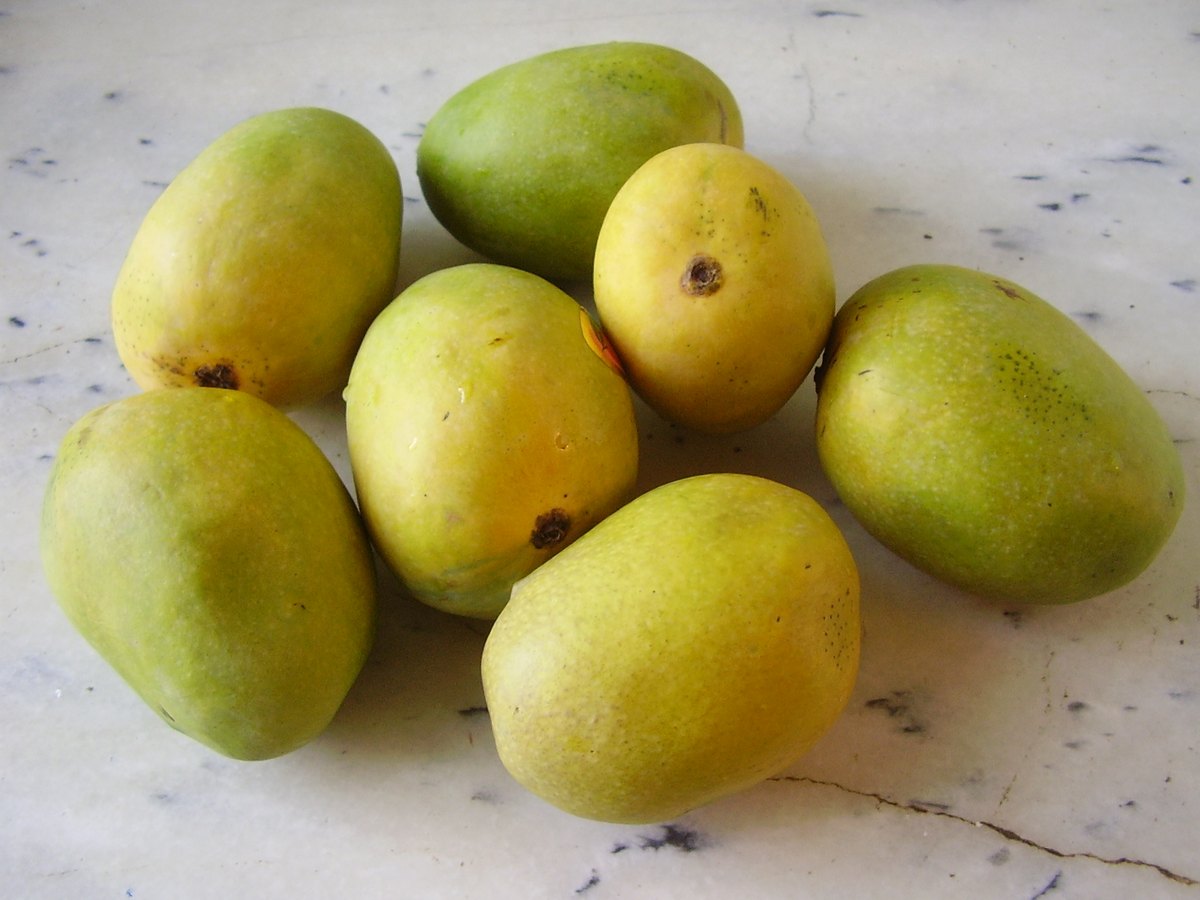
Anwar Ratol mangoes from Punjab, Pakistan, as identified by Khalid Mahmood.
Anwar Ratole.JPG — Khalid Mahmood. Photograph source · CC BY-SA 3.0.

Resized for display; complete frame retained. No generative edits.
How it tastes
Very sweet · Aromatic · Smooth
- Texture
- buttery
- Fibre
- Low fibre
- Eating styles
- Bring a spoon
- Harvest
- See regional calendars
How to enjoy it
Anwar Ratol makes size a poor guide to flavour. In a study of mangoes grown around Multan, this compact fruit earned high marks for flavour and taste. Pakistan celebrates its sweetness and low-fibre flesh; its country association here describes that living orchard and food culture.
Cut the small cheeks beside the stone, then scoop the ripe flesh. Taste it plain before adding anything sweet.
When it is ripe
Let the small fruit become fragrant and gently yielding; yellow colour alone is not enough.
Flavour notes are subjective. Ripeness, handling and growing conditions change the fruit.
Compare this mango · Saved mangoes
Names, history & sources
Recorded names
A shared name does not by itself establish an identical cultivar. Place, language and source matter.
- Anwar Ratol
Pakistan
- Mango Research Institute, Multan: varieties and harvest windows
- Naz et al.: sensory profiling of Multan mango cultivars (2014)
- Pakistan Horticulture Development & Export Company: mango varieties
- Planning Commission / CABI: Mango Cluster Study (2020), Table 3
- Gautam et al.: commercial mango cultivars, with special reference to Ratol (2019)
- Anwar Rataul
Pakistan
Existing catalogue label. It may be an alternate name, translation or market nickname; it is not an assertion of genetic identity.
- Anwar Retual
Pakistan
Existing catalogue label. It may be an alternate name, translation or market nickname; it is not an assertion of genetic identity.
- Anwar Ratual
Pakistan
Existing catalogue label. It may be an alternate name, translation or market nickname; it is not an assertion of genetic identity.
- Rataul (Anwar)
Pakistan
- Anwar Ratol / Anwar Rataul / Anwar Retual / Anwar Ratual
English spelling variants used in agricultural and trade records.
- Ratol No. 12
A separately listed late selection, not a synonym for this profile.
- انوررٹول
Urdu · Pakistan
PHDEC prints the Urdu name without a space between Anwar and Ratol.
A small fruit with a celebrated name
Documented name: the history of the first tree remains unresolved.
Pakistani agricultural records preserve several English spellings: Anwar Ratol, Anwar Retual and Rataul (Anwar). Research on fruit from around Multan confirms the compact cultivar’s strong flavour appeal. Its placement in our Pakistan guide describes that country’s cultivation and affection for it.
Gautam and colleagues’ 2019 horticultural paper traces Ratol to Baghpat, Uttar Pradesh, and connects Anwar with landholder Anwar ul Haq. We preserve that attributed account without claiming independently verified first-tree history. Punjab’s institute lists the later Ratol No. 12 separately, so that selection is not an interchangeable alias here.
Read the full storyPlaces in this record
Country associations alone do not establish botanical origin.
- Pakistan
Catalogue association
Associated place in the tasting catalogue; this does not establish botanical origin.
- Punjab and Sindh, Pakistan; the Ratol name also belongs to India
A place in the story
Setting of “A small fruit with a celebrated name”. Read the story for its evidence and qualifications.
Harvest calendars by growing place. These regional calendars do not specify this cultivar’s exact season.
Sources
- Mango Research Institute, Multan: varieties and harvest windows
- Naz et al.: sensory profiling of Multan mango cultivars (2014)
- Pakistan Horticulture Development & Export Company: mango varieties
- Planning Commission / CABI: Mango Cluster Study (2020), Table 3
- Gautam et al.: commercial mango cultivars, with special reference to Ratol (2019)
- PHDEC: Mango cultivation in Pakistan (Urdu, 2023), p. 1